
GFN – LONDON: OPEC production fell 900,000 barrels a day in August, with Saudi Arabia absorbing most of the decline, tightening supply as ICE Brent broke above $100 a barrel amid escalating conflict in the Persian Gulf.
Analysts said in a commodities note that preliminary figures put OPEC output at 19.91 million barrels a day in August, down 900,000 barrels a day on the month, according to a Bloomberg survey. Saudi Arabia accounted for the bulk of the fall, with production estimated 1.12 million barrels a day lower as Houthi forces in Yemen disrupted Red Sea shipments and targeted Saudi energy infrastructure. Iraq and Kuwait moved the other way, raising output by 270,000 and 70,000 barrels a day respectively.
Brent settled at $101.21 on Wednesday and traded above $105 on Thursday, having ended August below $95. US strikes hit five Iranian oil tankers near Kharg Island after Iran attempted to strike a US Navy warship, and Iran then fired ballistic missiles towards Jordan and warned that vessels in the Persian Gulf could be targeted. Estimates of flows through the Strait of Hormuz have edged higher to around 10 million barrels a day, roughly half pre-war levels.
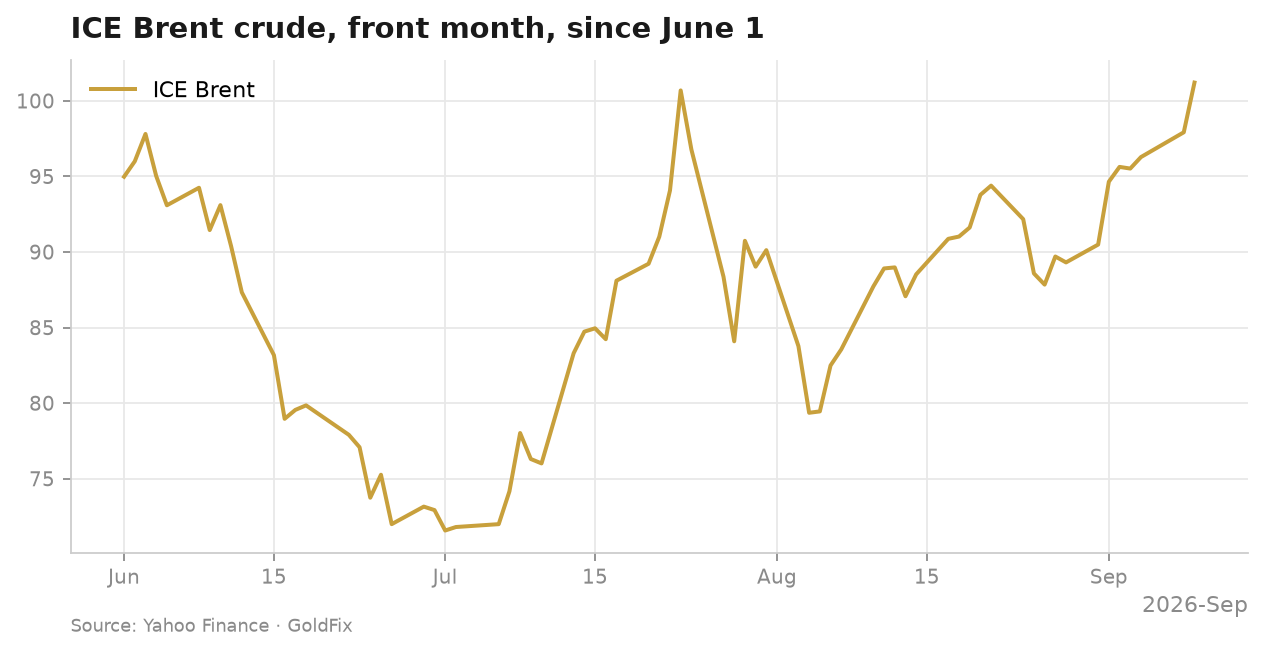
"Recent developments only reinforce the view that we're still some way from a restart in talks. In the meantime, the market is likely to continue to price in a sizeable risk premium," the note said.
Chinese buying has recovered from its June trough without returning to prior levels. Crude imports averaged 8.88 million barrels a day in August, up 5% on the month from a low of 7.15 million in June, and 24% below year-earlier levels, leaving cumulative imports for the first eight months of 2026 down 14.7% year-on-year. Sizeable domestic inventories make the lower run rate sustainable for the world's largest importer, and the assessment framed that spare capacity as a buffer if further disruptions follow.

The development underscores the supply side's renewed prominence in crude pricing, with OPEC volumes, the Hormuz corridor and China's import pace setting the terms on which the market absorbs Persian Gulf risk.