
Strait Jacket: Crude Tightens From Both Ends
Seventh straight US inventory draw as Iran says Hormuz stays closed until further notice
GFN – LONDON: Oil prices rose for a second session after renewed US strikes on Iran and Tehran's declaration that the Strait of Hormuz would remain closed, deepening doubts that a deal to restore Persian Gulf energy flows is near.
Crude extended its advance in early trading after President Trump warned that further strikes would follow unless Tehran agreed to a deal, while Iran said the chokepoint would stay shut until further notice, a step it cannot formally enforce but one that makes vessel crossings more difficult and leaves shipowners reluctant to transit the waterway, analysts said in a daily commodities note.

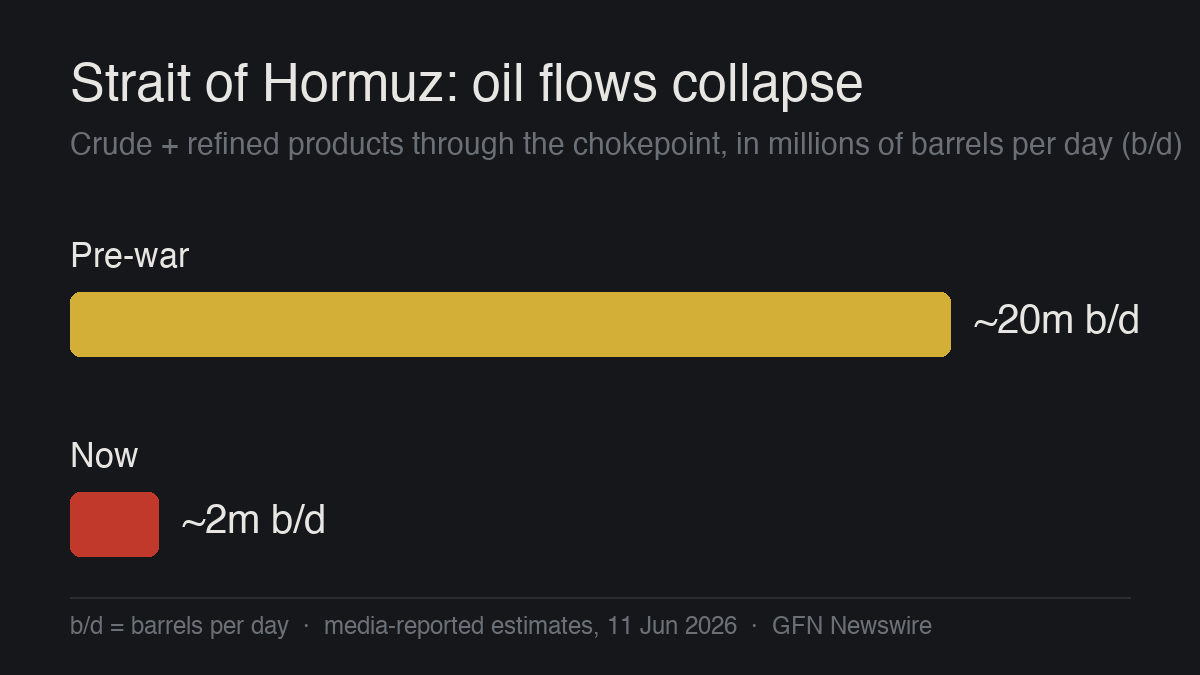
Media reports have pointed to roughly 2 million barrels per day of crude and refined products moving through the strait, compared with pre-war flows of about 20 million barrels per day, a level already embedded in the note's assumptions.
"If anything, there's downside risk to this number in the short term, given the more recent re-escalation," the note said.
The supply backdrop is tightening elsewhere. EIA data showed US commercial crude inventories fell 7.23 million barrels last week, a seventh consecutive weekly decline that leaves stocks at a little over 426 million barrels, around 5% below the seasonal five-year average; including strategic petroleum reserve releases, total crude stocks dropped 15.15 million barrels. Strong refinery activity lifted gasoline inventories marginally, up 186,000 barrels, while jet fuel output ran almost 23% above the seasonal five-year norm amid global tightness in that market.
China, which restricted refined product exports soon after the war began, has reportedly issued a second tranche of export quotas totaling 13 million tonnes, though the analysis cautioned that the allocation may not translate into higher actual export flows. In precious metals, gold extended losses as firmer Treasury yields outweighed softer core inflation data, leaving prices below their year-opening level. The development underscores the Strait of Hormuz's continued centrality to global energy supply and the widening reach of the US-Iran confrontation across commodity markets.