

Core Takeaways
Every complex option structure is built from butterfly components
Options are modular, like Legos
Butterfly = largest coherent structure
Requires precision, not just direction
Balances cost, risk, and probability
I. Teaching Framework
Different learning styles:
Abstract (numbers first)
Visual (graphs)
Hybrid (spreadsheet + structure)
Target audience:
Adults with basic options knowledge
Can do math
Want application, not definitions
Goal:
Understand how option structures evolve logically from a simple bullish view.
II. Starting Point: Bullish on Gold at $5,000
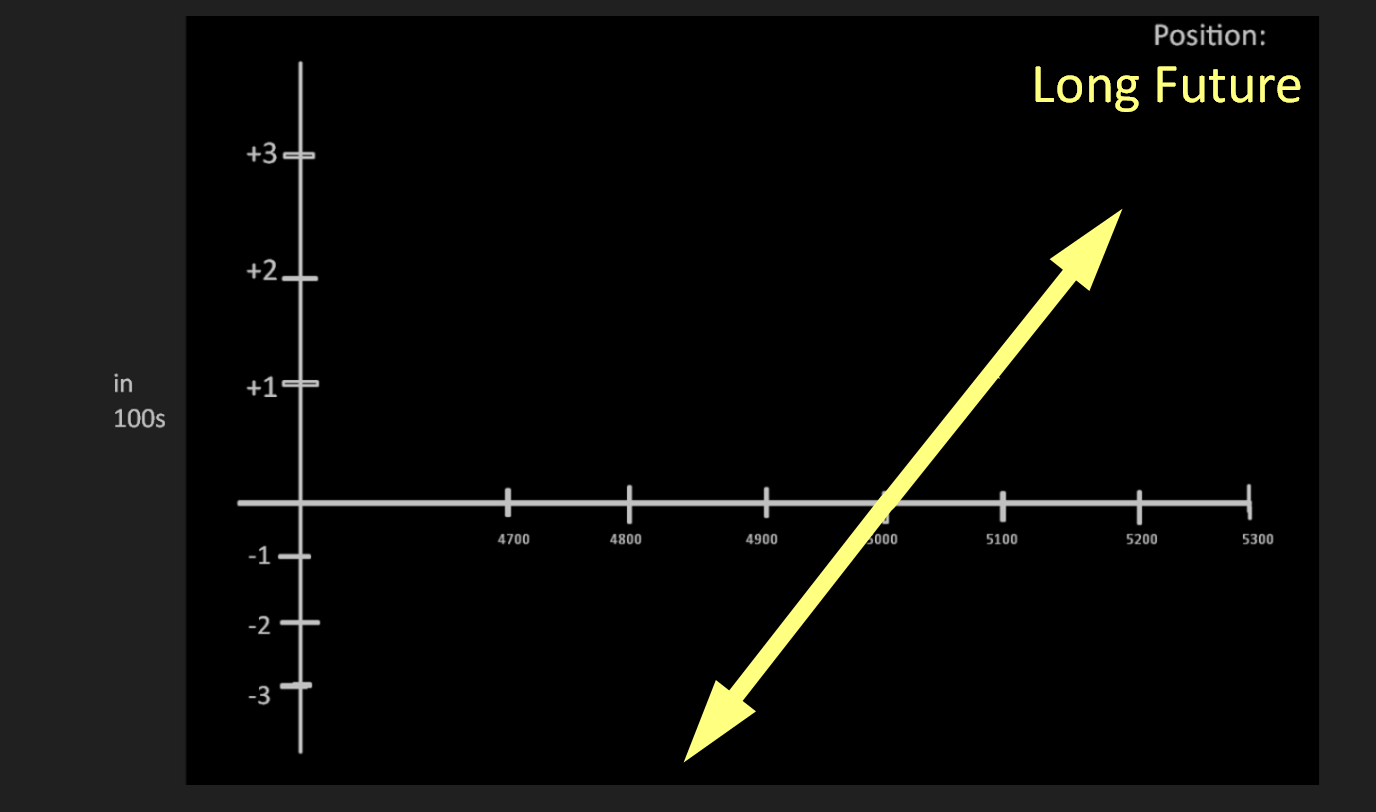
A. Long Future / Long Stock
Linear P&L
+$1 for every $1 up
−$1 for every $1 down
Unlimited upside
Unlimited downside
Key Concept: Pure directional exposure.
III. Reducing Risk: Long Call
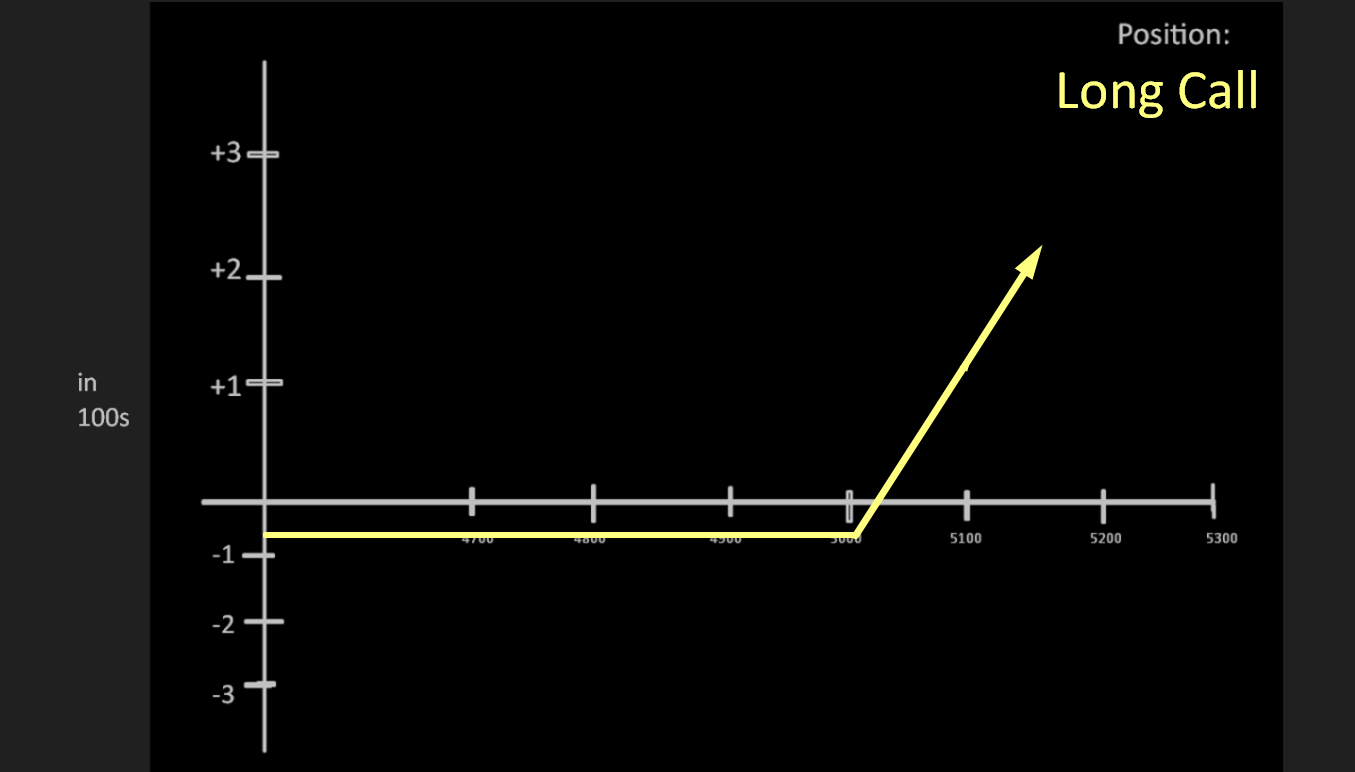
Buy $5,000 call
Downside limited to premium paid
Break-even above strike + premium
Retains unlimited upside
Trade-off:
Defined risk
Requires capital outlay
Needs move beyond break-even
IV. Reducing Cost: Call Spread
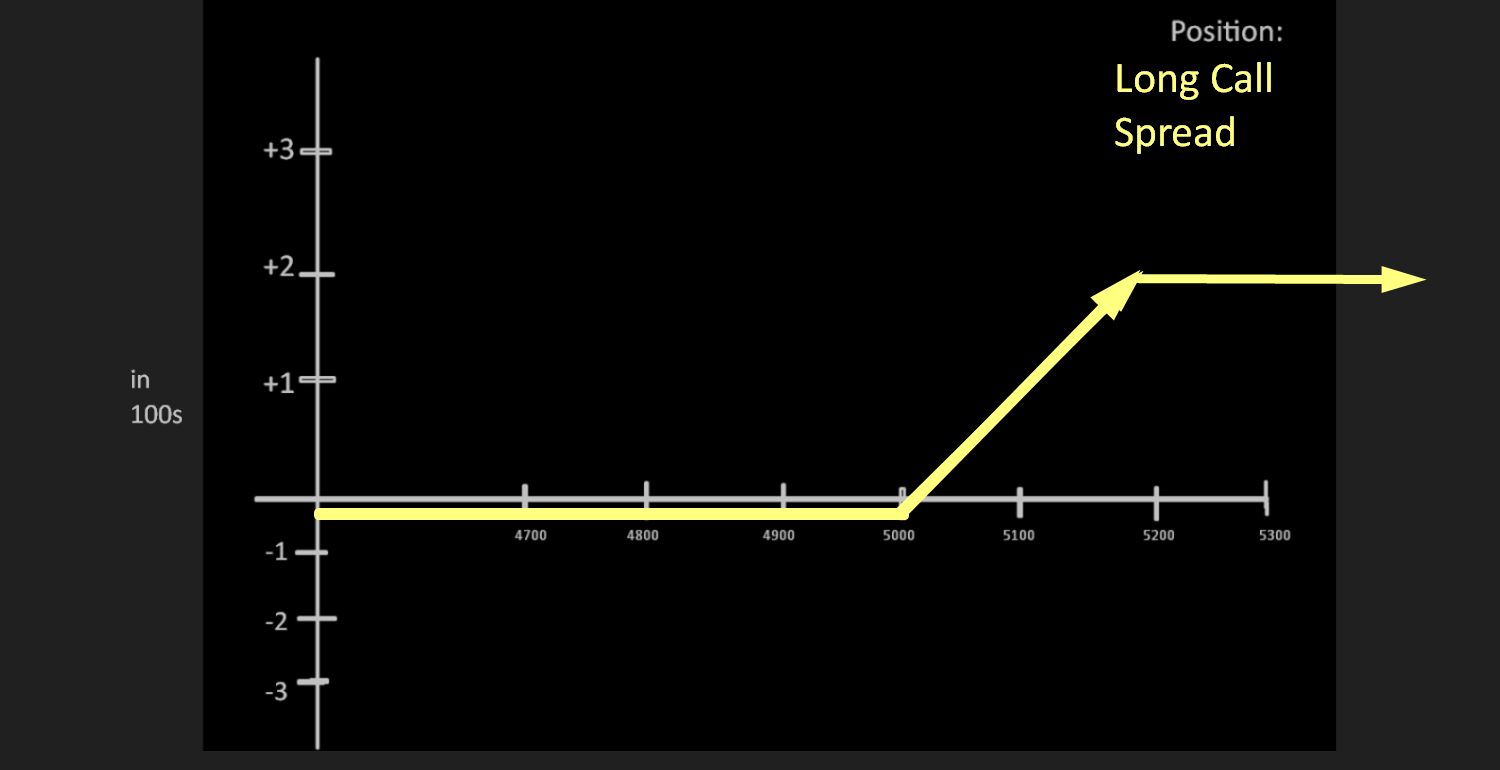
Buy $5,000 call
Sell $5,200 call
Lower premium outlay
Profit capped above $5,200
Trade-off:
Sacrifice unlimited upside
Cheaper structure
More efficient if target is defined
V. Increasing Premium: Ratio Call Spread
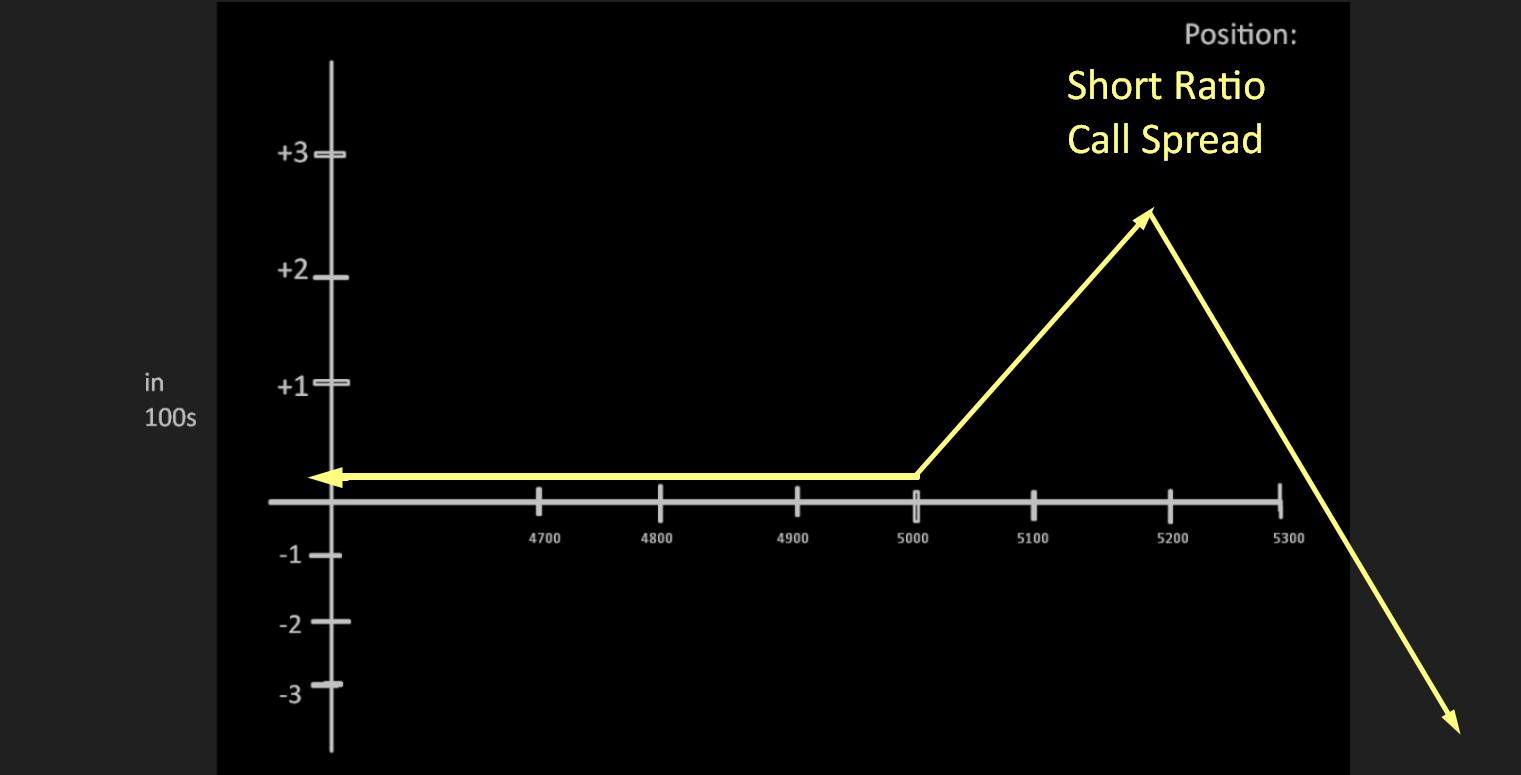
Buy 1 $5,000 call
Sell 2 $5,200 calls
Collect more premium
Max profit near $5,200
Unlimited risk above
Reality Check:
Margin intensive
Risk accelerates above short strike
Clearing firm constraints
VI. Containing Risk: Creating the Butterfly
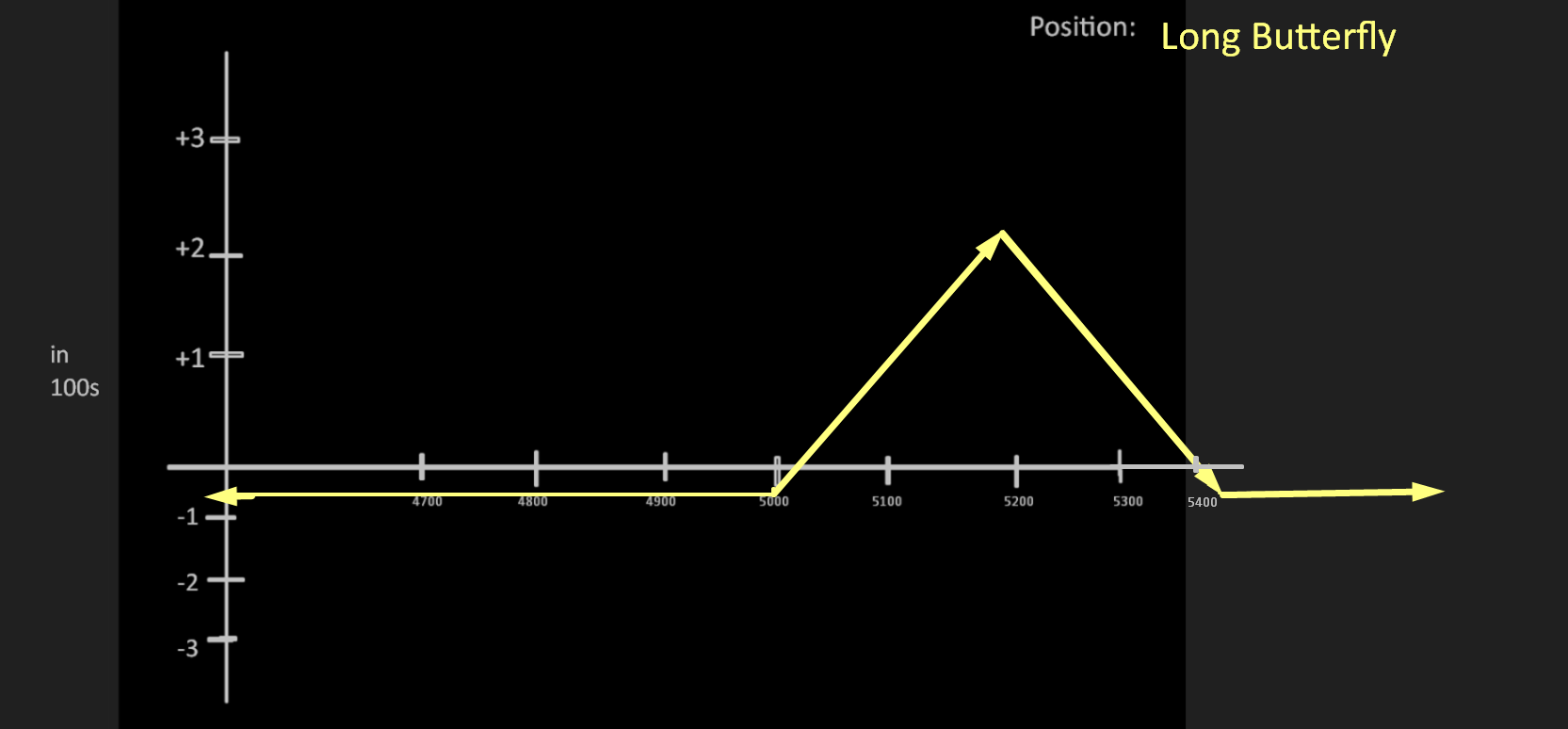
Buy $5,000 call
Sell 2 $5,200 calls
Buy $5,400 call
Structure:
Long wings
Short body
P&L Characteristics:
Defined risk
Max profit at $5,200
No unlimited exposure
Profits confined to range
VII. When to Use a Butterfly
A. Before the Move
Strong belief market settles near a precise target
B. During a Trade
Long call already profitable
Market reaches target zone
Convert position into defined-risk structure


