
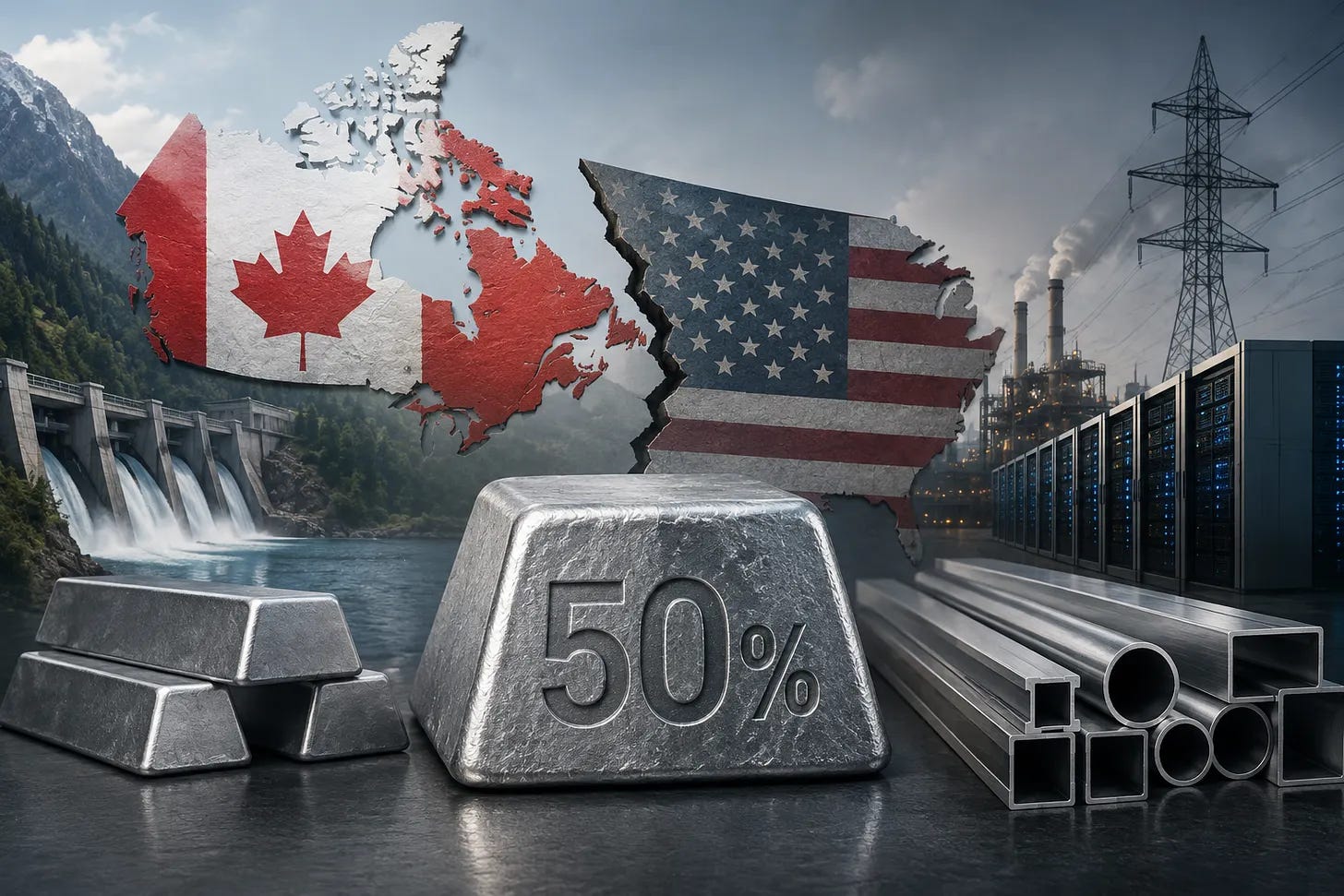
GFN – WASHINGTON: President Donald Trump said the United States desperately needs aluminum after trade talks with Canada collapsed, leaving a 50% tariff in place on Canadian metal that US manufacturers depend on for the bulk of their supply.
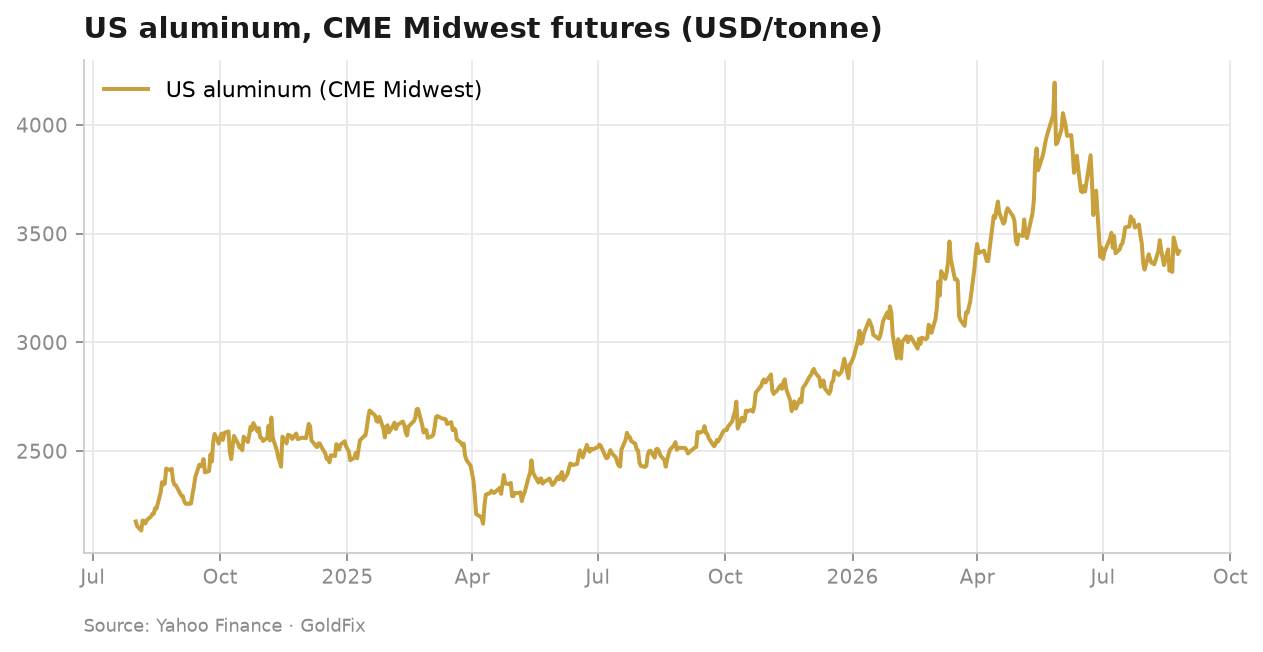
Analysts said in a commodities note that the two countries had been close to a deal that would have cut the tariff on Canadian aluminum to 25% from 50%, and that the United States, which produces around 750,000 tonnes of primary aluminum a year while imports meet roughly 85% of domestic needs, cannot close that gap quickly because new capacity takes years to permit, finance, build and ramp up. The tariff has pushed the Midwest premium, paid on top of the London Metal Exchange price, to record levels, supporting domestic producer margins while raising costs for import-reliant manufacturers.
"If the goal is to reduce US reliance on imports, tariffs are only part of the answer. The US also needs affordable power, infrastructure, long-term investment and policy certainty," the note said.
Companies with approved investment plans may import primary aluminum linked to their expected US output at half the standard tariff rate. The proposed $4 billion smelter in Inola, Oklahoma, a joint venture between Emirates Global Aluminium and Century Aluminum, is expected to produce 750,000 tonnes a year, roughly doubling US output as the first new primary smelter built in the country in almost 50 years.
Electricity accounts for 30% to 40% of primary aluminum production costs, and Inola will require around 1.2 gigawatts; a power agreement has not been finalized and the project has faced local opposition over emissions, land use and electricity costs.
Century sold its idled Hawesville smelter in Kentucky, offline since 2022 on high power costs, to data center developer TeraWulf earlier this year, and its 480 megawatts will now serve AI computing. Canada's smelters run on hydropower at a competitive cost, and even if Inola proceeds as planned the United States will still need imports, leaving Canadian metal subject to the full 50% tariff. The development underscores the extent to which US industrial policy on metals remains bound to electricity supply, with smelters and data centers now competing for the same power.