
Warsh is Pro-Yield Curve Control

President Donald Trump’s nominee to lead the Federal Reserve, Kevin Warsh, has stirred debate across Wall Street after reviving the idea of a formal accord between the Fed and the Treasury, raising questions about balance-sheet policy, market volatility, and central-bank independence in the $30 trillion US bond market.
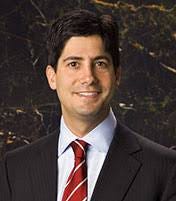
During his campaign to become Fed chair, Warsh called for overhauling the relationship between the two institutions with a modernized version of the 1951 Fed-Treasury Accord. That agreement sharply limited the Fed’s role in the bond market, a contrast to today’s environment following trillions of dollars in asset purchases during the global financial crisis and the Covid pandemic.
Neither Warsh nor Treasury Secretary Scott Bessent has detailed what a new framework might entail once Warsh takes office. In a CNBC interview last year, Warsh said an agreement could “describe plainly and with deliberation” the appropriate size of the Fed’s balance sheet, alongside Treasury plans for debt issuance.
Investors are divided on the potential impact. A narrow revision could amount to little more than a bureaucratic adjustment, with minimal near-term consequences for Treasury markets. A broader restructuring, particularly one involving the Fed’s $6 trillion-plus securities portfolio, could inject volatility and intensify concerns over the Fed’s autonomy.
Trump’s views loom over the discussion. The president has argued that the central bank should consider government borrowing costs when setting interest rates, as annual interest expenses approach $1 trillion, roughly half of the federal budget deficit.
“Rather than insulating the Fed, it could look more like a framework for yield-curve control,” Tim Duy, chief US economist at SGH Macro Advisors, said. “A public agreement that synchronizes the Fed’s balance sheet with Treasury financing explicitly ties monetary operations to deficits.”
The historical precedent underscores the stakes. During World War II and its aftermath, the Fed capped Treasury yields to help contain borrowing costs, a policy that contributed to surging postwar inflation. The 1951 accord ended that arrangement, marking a defining moment for Fed independence by allowing policymakers to set interest rates without Treasury direction.
Warsh and Bessent are like “peas and carrots.” Most of us never bought the “Warsh is a hawk” B.S. “Mamma say that Warsh is an elitist insider and will do what is required of him by his controllers. And that’s all I got to say about that. “😉😀