
Why Standard Chartered Sees a Long-Term Floor for Bullion
GFN – LONDON:
Gold prices have declined sharply amid heightened geopolitical tensions and liquidity-driven market positioning, but structural demand factors and historical price behavior continue to support the case for renewed upside in the precious metal.
Standard Chartered said gold’s recent decline of approximately 12% since the escalation of the Middle East conflict reflects short-term liquidity pressures and portfolio rebalancing rather than a breakdown in its role as a haven asset, according to analysis by its global head of commodities research (via FT).
“Gold’s haven status remains intact even as it switches roles in the short term,” said Suki Cooper, global head of commodities research at Standard Chartered.

The report noted that during periods of market stress, investors often liquidate gold positions to meet margin calls and raise cash, a dynamic that historically weighs on prices for several weeks following a crisis event before demand recovers. This pattern was observed during the global financial crisis, when gold required several months to retrace initial losses.
Standard Chartered said the current sell-off has been amplified by prior positioning, with gold reaching record highs in January and trading significantly above its 50-day moving average, making it vulnerable to profit-taking. The subsequent move below that average reflects a shift from overbought to oversold conditions, alongside a rise in implied volatility to levels last seen during the pandemic.

The bank added that short-term price movements have increasingly tracked US interest rate expectations, as reduced expectations for rate cuts have raised the opportunity cost of holding non-yielding assets. Exchange-traded product outflows in March are on pace for the steepest decline since September 2022, although the pace of liquidation has begun to moderate.
“Gold is not currently pricing in recession risks or stagflation dynamics,” the report said.
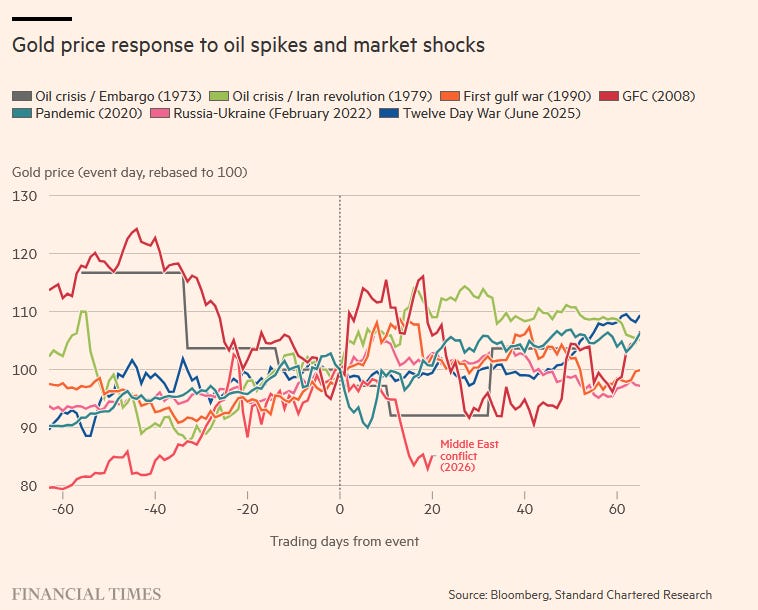
Standard Chartered highlighted continued central bank demand, elevated global debt levels, and persistent geopolitical uncertainty as structural factors underpinning long-term support for gold, reinforcing its role within global reserve allocation and macro-hedging strategies.